Shopping for a 36-inch refrigerator isn’t just about picking the first model that fits your space. It’s about finding the right balance between capacity, features, and kitchen layout, without leaving yourself short on aisle clearance or cabinet alignment. A 36-inch wide refrigerator is the most common size in American homes, bridging the gap between compact models and professional-grade units. Whether you’re replacing an old fridge or designing a new kitchen, understanding what makes a great 36in refrigerator matters more than ever. Features, configurations, and installation requirements can vary widely, and getting it wrong means living with buyer’s remorse every time you open the door.
Table of Contents
ToggleKey Takeaways
- A 36-inch refrigerator is the ideal standard size for most American kitchens, offering the perfect balance between capacity (20–28 cubic feet), functionality, and compatibility with standard cabinet widths without requiring structural modifications.
- French door models dominate the 36 inch wide refrigerator category because they provide ergonomic benefits, with fresh food at eye level and flexible storage options, making them the best choice for most households.
- Before purchasing, accurately measure your space—including width at the narrowest point, ceiling height, depth accounting for door swing, and doorway clearance—to ensure proper fit and avoid costly installation issues.
- Built-in counter-depth models offer a cleaner aesthetic but sacrifice 2–4 cubic feet of capacity and cost significantly more ($3,000–$8,000+), while freestanding models are more affordable and practical for most kitchen replacements.
- Prioritize essential features like dual evaporators for temperature management, adjustable glass shelving, ENERGY STAR certification for efficiency, and a minimum 5-year compressor warranty to maximize longevity and performance.
- Allow the refrigerator to sit upright and unplugged for at least 4 hours after delivery before connecting it, and ensure it operates on a dedicated 15–20 amp circuit with adequate ventilation clearance for reliable operation.
Why 36-Inch Refrigerators Are the Sweet Spot for Most Kitchens
A 36 refrigerator hits the Goldilocks zone: large enough for a family of four to six, compact enough to fit standard kitchen layouts without dominating the room. Most base cabinets are built in 3-inch increments, and 36 inches aligns perfectly with standard cabinet widths, making installation and adjacent cabinetry much simpler.
Interior capacity typically ranges from 20 to 28 cubic feet, depending on whether the model is freestanding or built-in. That’s enough room for weekly grocery hauls, meal prep containers, and a gallon of milk without Tetris-level stacking. Counter-depth models sacrifice a few cubic feet but sit flush with cabinetry for a cleaner, integrated look.
There’s also a practical reason why 36 inch wide refrigerator models dominate the market: doorway clearance. Most interior doorways are 32 to 36 inches wide (nominal), and a 36in refrigerator, once you account for packaging and pivot room, can navigate tight hallways and kitchen entries without requiring door removal or wall modifications. If you’re working with a galley kitchen or older home, that’s a big deal.
From an energy standpoint, a 36-inch unit often hits the efficiency sweet spot. Smaller models may seem more economical, but they lack the insulation thickness and compressor efficiency found in full-size units. Larger models (42+ inches) can draw more power and require beefier electrical circuits. Most 36 wide refrigerator models run on standard 115V household circuits and average 400–700 kWh annually, depending on features like ice makers and smart connectivity.
Top Configuration Styles: French Door, Side-by-Side, and Bottom Freezer
French Door Models
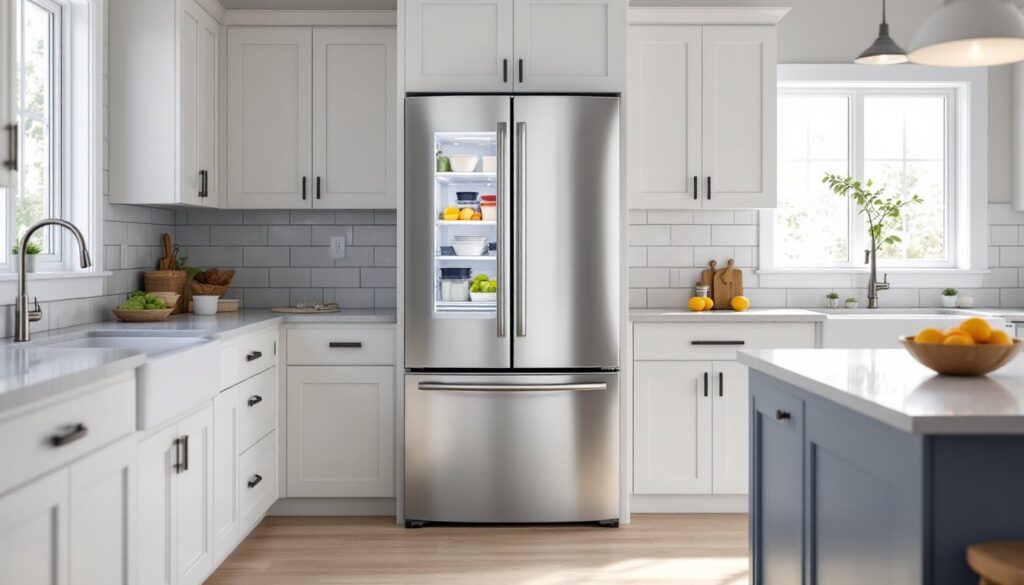
French door refrigerators dominate the 36-inch category for good reason. The double-door top section provides wide-open fridge access without requiring as much swing clearance as a single full-width door. That matters in kitchens where islands, counters, or appliances sit close by.
Most French door models place the freezer as a bottom drawer, which ergonomically makes sense, fresh food gets accessed more often, so it sits at eye level. Interior layouts often include adjustable shelving, door bins tall enough for gallon jugs, and dedicated deli or produce drawers with humidity controls.
When evaluating the best 36-inch wide refrigerator in this category, pay attention to door bin capacity and shelf adjustability. Cheaper models lock shelves into fixed slots, limiting your ability to fit taller items like pizza boxes or layer cakes. Higher-end units offer flip-up shelves and flexible bin heights. Reviews from lab testing and real consumers consistently rank models with customizable layouts higher for day-to-day usability.
One drawback: the center divider between the two fridge doors can limit the width of items you can slide in. If you regularly store full-sheet baking pans or wide platters, measure the interior opening, not just the exterior cabinet width.
Side-by-Side and Bottom Freezer Options
Side-by-side models split the refrigerator vertically: freezer on one side, fridge on the other. The narrow door swing is a plus in tight spaces, but the trade-off is limited shelf width. You won’t fit a full pizza box or party platter flat without angling or removing shelves.
These models often include through-the-door ice and water dispensers, which is convenient but eats into interior freezer space. The dispenser mechanisms and water lines also add potential failure points. If you go this route, budget for periodic filter replacements (typically every six months) and check that your kitchen has a water line stub-out nearby.
Bottom freezer configurations without the French door setup, essentially a single full-width fridge door on top and a freezer drawer below, are less common in the 36-inch category but worth considering if you prioritize fridge space. These models max out usable refrigerator volume and keep frozen goods accessible without bending as much as a top-freezer design. They’re often the best 36 inch wide refrigerator choice for households that buy fresh more than frozen.
Skip top-freezer models in this size range unless budget is the sole driver. They’re harder to find in 36 inches, and the ergonomics are worse: you’re bending for fresh groceries and reaching overhead for frozen items you access less often.
Essential Features to Look for in a 36-Inch Refrigerator
Start with temperature management. Dual evaporators or separate cooling systems for fridge and freezer prevent odor transfer and maintain more consistent humidity levels. Single-system models are cheaper but tend to dry out produce faster and allow freezer smells to migrate.
Look for adjustable shelving made from tempered glass, not wire racks. Glass is easier to clean and contains spills. Removable bins and door shelves make deep cleaning possible without acrobatics. Some models include spill-proof edges or sealed bins, worth it if you’ve ever dealt with a leaking carton of leftovers.
Energy efficiency matters, especially in a unit that runs 24/7. Check the EnergyGuide label for estimated annual operating cost. ENERGY STAR-certified models typically use 10–15% less energy than federal minimums. Given that a refrigerator can last 10–15 years, that adds up.
Ice and water dispensers are convenient but add complexity. External dispensers require a water line hookup (usually 1/4-inch copper or braided stainless) and a drain or drip tray. Internal ice makers free up door space but mean opening the door to grab ice. Consider your household’s usage: if you fill water bottles from a pitcher anyway, skip the dispenser and gain interior space.
Smart features, Wi-Fi connectivity, internal cameras, touchscreen panels, are proliferating but aren’t essential. They can be handy for monitoring temps remotely or checking contents from the grocery store, but they also add cost and potential tech obsolescence. If you choose a smart model, make sure it functions fully without the app: you don’t want to lose basic controls if the manufacturer sunsets support.
Finally, check the compressor warranty. Most manufacturers offer 1 year parts and labor, but the compressor, the heart of the unit, should carry at least a 5-year warranty. Some premium models extend this to 10 years. Compressor failure is the most common reason a refrigerator gets scrapped before its time.
Built-In vs. Freestanding: Which 36-Inch Model Suits Your Kitchen Layout?
Freestanding refrigerators are the standard. They’re designed to stand alone, often with finished sides and a bit of extra depth (typically 30–34 inches, not including door handles). They sit slightly proud of standard 24-inch base cabinets, which is fine in most layouts but can look bulky in contemporary or high-end kitchens.
These models are easier to install, no custom cabinetry required, and more affordable, typically ranging from $1,200 to $3,500 depending on features. They’re also easier to replace: when the unit dies in 12 years, you can swap in a new one without reworking the kitchen.
Built-in or counter-depth models are shallower (around 24–26 inches deep, excluding doors) and designed to sit flush with cabinetry. The result is a cleaner, more integrated look. But you’ll sacrifice interior capacity, often 2–4 cubic feet compared to a standard-depth model of the same width, and pay a premium, with prices starting around $3,000 and climbing past $8,000 for high-end brands.
Built-ins often require custom panels to match surrounding cabinetry, adding labor and material costs. They also typically need more clearance on the sides for ventilation (check the manufacturer’s specs: it’s usually 1/2 to 1 inch on each side). If you’re remodeling or building new, a built-in can be worth it for the aesthetics. If you’re replacing a fridge in an existing kitchen, a freestanding model is the practical choice unless you’re ready to adjust cabinetry.
One overlooked consideration: resale value. Built-ins signal a higher-end kitchen and can boost perceived home value, especially in markets where buyers expect premium finishes. Freestanding models are neutral, they neither help nor hurt, and some design-conscious buyers may even see a standard fridge as an invitation to upgrade on their own terms. The editorial team at The Kitchn often emphasizes that kitchen layout cohesiveness matters more than individual appliance specs when it comes to buyer appeal.
Measuring Your Space and Planning for Proper Installation
Before you buy, measure three things: height, width, and depth. Use a tape measure, not the eyeball method, and write the numbers down.
Width: Measure the opening at the narrowest point, usually where the fridge will sit between cabinets or walls. A 36-inch refrigerator is nominally 36 inches wide, but actual dimensions vary. Some models are 35.75 inches, others are 36.25 inches. Manufacturers list exact dimensions in the spec sheets, check before you order. Allow at least 1/2 inch total clearance (1/4 inch per side) for fit and ventilation.
Height: Standard ceiling height is 8 feet (96 inches), but once you account for flooring and any soffits or cabinets above, the usable height shrinks. Most 36-inch fridges are 68–70 inches tall, leaving plenty of clearance. But if you have a low soffit or recessed ceiling, measure from the floor to the underside of the obstruction. Also, check if the top of the fridge has a hinge or compressor housing that extends higher than the door, some models do.
Depth: Measure from the back wall (or back of the cabinetry, if recessed) to the front edge of your counters. Standard counters are 24 inches deep, but with a 1-inch overhang, base cabinets are typically 23 inches. A standard-depth fridge will stick out 6–10 inches past your counters once you include door handles. If that bothers you, look at counter-depth models. Also measure doorways and hallways along the delivery path, movers can handle some tight spots, but a 36-inch box won’t fit through a 30-inch door.
Check the back of the fridge for ventilation and connection requirements. Most models need at least 1 inch of clearance behind and on the sides for airflow. If you’re tight on space, some manufacturers offer “zero-clearance” designs with front or top ventilation, but these are less common and pricier.
Electrical and plumbing: Refrigerators run on standard 115V outlets, but the outlet should be on a dedicated 15 or 20-amp circuit per NEC guidelines. If you’re adding a water line for an ice maker, you’ll need a 1/4-inch supply line and a shutoff valve accessible without moving the fridge. Many jurisdictions require a shutoff within six feet. If you’re not comfortable running a water line, hire a plumber, it’s a half-hour job for a pro and a potential flood risk if done wrong.
Finally, factor in door swing and user clearance. Open the fridge doors (both, if French door) and make sure they don’t hit islands, adjacent appliances, or walls. Also consider whether someone can stand in front of the open fridge without blocking the main kitchen pathway. When experts at Tom’s Guide evaluate smart appliances and home layouts, they consistently note that poor spatial planning undermines even the best features.
Once delivered, let the fridge sit upright and unplugged for at least 4 hours before plugging it in. This allows the compressor oil to settle after transport. Skipping this step can shorten compressor life.