If you’re upgrading your kitchen with appliances that blend performance with upscale aesthetics, GE Cafe dishwashers deserve a hard look. These aren’t your builder-grade basics, they’re designed for homeowners who want quiet operation, flexible loading, and finishes that match high-end cabinetry. But premium features come with premium pricing, and not every model delivers the same value. This guide breaks down what sets GE Cafe apart, compares key models, and walks through installation considerations and maintenance routines to keep your investment running smoothly for years.
Table of Contents
ToggleKey Takeaways
- GE Cafe dishwashers deliver library-quiet operation at 42-45 dBA with customizable hardware finishes, making them ideal for open-concept kitchens and high-end kitchen designs.
- The dual-spray arm system with bottle wash jets and adjustable third rack provide flexible loading capacity about 30% more than standard dishwashers, efficiently handling modern cookware and drinkware.
- GE Cafe models are Energy Star certified, using only 3.5 gallons per cycle with annual operating costs around $35-40, significantly reducing water and energy expenses compared to handwashing.
- The CDT845P and CDT836P series offer the best value, with the CDT836P saving $200-250 while sacrificing only 3 dBA of noise and the UltraWash cycle.
- Installation of a GE Cafe dishwasher is a manageable 2-3 hour DIY project if replacing an existing unit, requiring only basic plumbing connections and electrical verification.
- Regular monthly maintenance—cleaning filters, wiping door seals, and inspecting spray arms—keeps your GE Cafe dishwasher running efficiently for a typical 10-12 year lifespan.
What Makes GE Cafe Dishwashers Stand Out?
GE Cafe dishwashers occupy the step-up tier in GE Appliances’ lineup, positioned above the standard GE Profile series but below the ultra-premium Monogram line. The distinction isn’t just cosmetic.
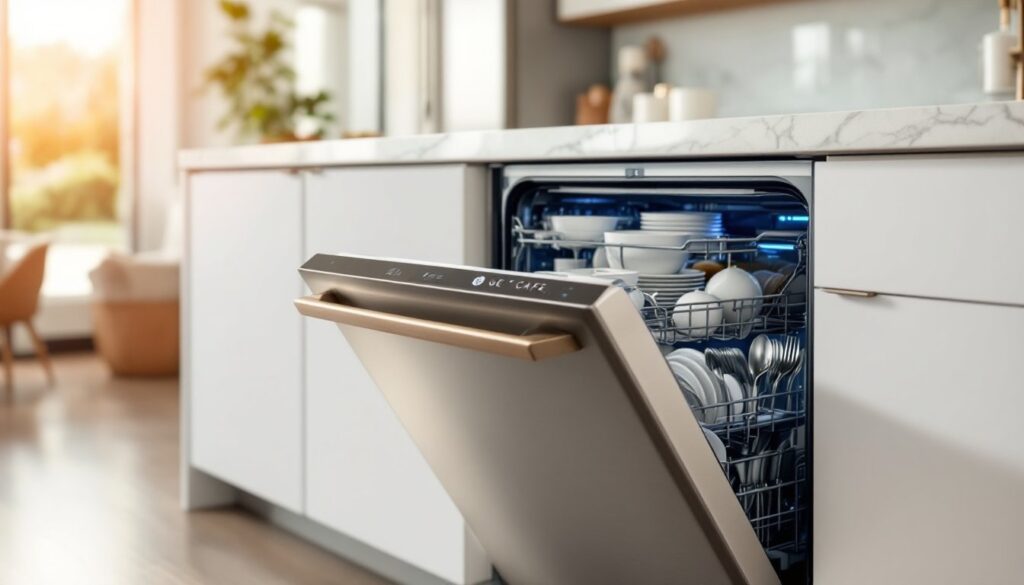
Design Flexibility: Cafe models offer customizable hardware finishes, brushed bronze, brushed black, brushed stainless, and brushed copper handles and kickplates that can be swapped to match your kitchen’s aesthetic. You’re not locked into a single look, which matters if you update your space every few years.
Noise Levels: Most Cafe dishwashers run at 42-45 dBA, which is library-quiet. You won’t hear it running from the next room, a genuine advantage in open-plan homes. Compare that to budget models that often hit 50+ dBA.
Wash System: GE Cafe uses a dual-spray arm system with a bottle wash jet built into the upper rack. That targeted spray tackles narrow items like water bottles, travel mugs, and vases without a separate cycle. The third rack (standard on most models) adds about 30% more loading capacity for utensils and small items, freeing up the bottom rack for larger cookware.
Smart Features: Wi-Fi connectivity isn’t just a gimmick here. You can monitor cycle status, get alerts when detergent is low, and start or pause remotely via the GE Appliances app. It’s useful if you’re running errands and want the dishes done before you get home.
Key Features and Performance Capabilities
Here’s what you’re actually getting under the stainless steel tub:
Wash Cycles and Options:
- AutoSense cycle uses turbidity sensors to measure soil levels and adjusts water temperature and cycle time automatically. It’s the set-it-and-forget-it option for mixed loads.
- Steam + Sani reaches NSF-certified sanitization temperatures, eliminating 99.999% of bacteria. If you wash baby bottles or prep cutting boards for raw meat, this matters.
- Dry Boost with Fan Assist uses a heating element plus a fan to improve drying on plastics, which traditionally come out wet in most dishwashers.
Capacity and Rack Design:
The third rack measures roughly 22 inches wide and 3 inches deep, accommodating flatware, serving utensils, and small prep tools. The middle rack has adjustable tines that fold down to fit awkward items like stand mixer bowls or baking sheets. You can also adjust the upper rack height with a simple lever, no tools required.
Water and Energy Use:
GE Cafe dishwashers are Energy Star certified, using approximately 3.5 gallons per cycle on normal wash. Annual operating cost runs around $35-40 in electricity and water combined, based on average U.S. utility rates. That’s comparable to other premium dishwashers and significantly better than handwashing, which can use up to 27 gallons per load.
Build Quality:
The stainless steel tub and door liner resist staining and odor better than plastic interiors. The door hinge system feels solid, no flex or wobble, and the latch engages cleanly. Expect a 10-12 year lifespan with proper maintenance, based on typical appliance longevity data from product reviews for home appliances that track long-term performance.
Popular GE Cafe Dishwasher Models Compared
GE Cafe’s current lineup includes a few standout models. Here’s how they stack up:
CDT845P Series (Top-Tier):
- Noise level: 42 dBA
- Racks: Three, with adjustable upper rack and bottle jets
- Cycles: 7 wash cycles including UltraWash & Dry with Steam + Sani
- Finish options: Customizable hardware in four finishes
- Price range: $1,200-1,400 (varies by finish and retailer)
This is the flagship model. If you want every feature and the quietest operation, this is it. The UltraWash & Dry cycle is particularly effective on baked-on casserole dishes.
CDT836P Series (Mid-Range):
- Noise level: 45 dBA
- Racks: Three, with adjustable tines
- Cycles: 6 wash cycles, Steam + Sani included
- Finish options: Same customizable hardware
- Price range: $1,000-1,150
You lose the UltraWash cycle and gain 3 dBA of noise. For most households, that’s an acceptable trade-off to save $200. Performance on everyday loads is nearly identical.
CDT725S Series (Entry Cafe):
- Noise level: 47 dBA
- Racks: Two (no third rack)
- Cycles: 5 wash cycles, no Steam option
- Finish options: Standard stainless or slate
- Price range: $850-950
This model drops the third rack and steam sanitization. It’s still quieter than most budget dishwashers, but you’re sacrificing the features that define the Cafe line. Only consider this if you’re stretching budget and want the Cafe aesthetic without the full feature set.
Installation and Setup Tips for Homeowners
Replacing an existing dishwasher is a manageable DIY project if your plumbing and electrical are already in place. Expect 2-3 hours for a straightforward swap.
Before You Start:
- Check rough-in dimensions: Standard dishwasher opening is 24 inches wide, 24 inches deep, and 34-35 inches tall. GE Cafe models fit this footprint, but confirm your cabinet opening before ordering.
- Verify electrical: Dishwashers require a dedicated 20-amp circuit. GE Cafe models can be hardwired or use a plug-in cord (sold separately). Check your local code, some jurisdictions require hardwiring.
- Water supply: You’ll need a 3/8-inch compression fitting on your hot water line. If you’re replacing an old unit, the supply line is likely already there.
Step-by-Step Installation:
- Shut off water and power at the shutoff valve and breaker. Confirm power is off with a voltage tester.
- Disconnect the old unit. Remove the lower access panel (usually two screws), then disconnect the water supply line, drain hose, and electrical connection. Pull the old dishwasher out carefully, there may be leftover water in the sump.
- Prep the new unit. Attach the 90-degree elbow fitting to the water inlet (hand-tighten, then one quarter-turn with a wrench). Connect the drain hose to the drain outlet and secure with a hose clamp.
- Position and level. Slide the new dishwasher into the opening. Use the adjustable front legs to level the unit, check both side-to-side and front-to-back. An unlevel dishwasher won’t drain properly.
- Secure to countertop. Drive screws through the mounting tabs into the underside of your countertop. Use the provided brackets if you have stone or tile counters.
- Connect utilities. Attach water supply, drain hose, and electrical. Turn on water and power, then run a test cycle to check for leaks.
When to Call a Pro:
If your home doesn’t have existing dishwasher hookups, hire a licensed plumber and electrician. Running new water lines and electrical circuits requires permits in most jurisdictions. Also, if your kitchen organization plan involves relocating the dishwasher to a different spot, you’ll need professional help routing supply lines and drain connections.
Maintenance and Troubleshooting Best Practices
Premium appliances still need routine care. Here’s what keeps a GE Cafe dishwasher running efficiently:
Monthly Maintenance:
- Clean the filter. Remove the lower rack, twist out the cylindrical filter assembly, and rinse under hot water. Food debris clogs the filter and reduces wash performance. Takes 2 minutes.
- Wipe door seals. Use a damp cloth to remove grime from the rubber gasket around the door. Buildup here can cause leaks.
- Inspect spray arms. Remove the upper and lower spray arms (they twist off) and clear any clogs in the spray holes with a toothpick.
Every 3-6 Months:
- Run a cleaning cycle with a dishwasher cleaner (GE recommends affresh tablets, but any citric-acid-based cleaner works). This removes mineral deposits and grease buildup inside the tub and on the heating element.
- Check the air gap (if your installation has one). This small cylinder on your sink or countertop prevents backflow. Pop off the cap and remove any debris.
Common Issues and Fixes:
Dishes come out cloudy:
Usually caused by hard water. Switch to a detergent with built-in rinse aid, or increase the rinse aid dispenser setting (found in the door). GE Cafe models have a hardness sensor, but extremely hard water (above 180 ppm) may need a whole-house softener.
Not draining completely:
Check the drain hose for kinks or clogs. Also inspect the garbage disposal knockout plug, if you installed a new disposal recently, the knockout plug may not have been removed, blocking the drain connection.
Error codes:
- 1h or 2h blinking: Indicates a drainage issue. Clear the filter and check the drain hose.
- C1 or C2: Water temperature sensor fault. Run a hot water tap near the dishwasher for 30 seconds before starting a cycle. If it persists, call service.
When to Call Service:
If you see error codes related to the heating element, motor, or control board, those repairs require a technician. GE Cafe dishwashers have a one-year full warranty and extended warranties available. Parts are widely available through appliance repair suppliers, and many smart home device reviews note that GE’s service network is robust compared to some European brands.
Is a GE Cafe Dishwasher Worth the Investment?
At $1,000-1,400, GE Cafe dishwashers sit in the premium-but-not-luxury price bracket. Here’s how to decide if it’s the right spend:
You’ll Get Your Money’s Worth If:
- You value quiet operation in an open-concept home. The 42-45 dBA rating genuinely makes a difference during evening entertaining.
- You need flexible loading for unusual items. The third rack and adjustable tines handle modern cookware and drinkware better than basic models.
- You want customizable aesthetics without ordering a fully custom panel-ready unit (which can run $1,800+).
- You cook frequently and run the dishwasher 5+ times per week. The energy and water savings add up, and the time saved handwashing is meaningful.
Skip It If:
- Your household runs the dishwasher 2-3 times a week. A mid-range GE Profile or Whirlpool model at $700-800 will handle light use just fine.
- You’re renting or planning to move within 2-3 years. You won’t recoup the premium in that timeframe.
- You prioritize speed over quiet. Some brands (Bosch 500 series, for example) offer faster cycle times, though they may cost slightly more.
Resale Considerations:
Premium appliances add perceived value in home sales, especially if you’ve matched the entire suite (range, refrigerator, dishwasher). GE Cafe’s brand recognition helps, but don’t expect dollar-for-dollar return. Budget $800-1,000 of the cost as a personal quality-of-life investment, not a hard asset.
Conclusion
GE Cafe dishwashers deliver solid performance, genuinely quiet operation, and design flexibility that fits high-end kitchens without custom-panel pricing. The CDT845P series offers the full feature set, while the CDT836P provides nearly identical performance at a lower price point. Installation is DIY-friendly if you’re swapping an existing unit, and routine maintenance is straightforward. If you run your dishwasher frequently and value the quality-of-life upgrade that comes with quiet, efficient operation, a GE Cafe is a sound investment for your kitchen.