When an LG dishwasher flashes an error code, it’s not trying to ruin your evening, it’s giving you a diagnostic shortcut. These alphanumeric codes point to specific mechanical or electrical issues, from clogged drains to faulty motors. Understanding what each code means can save a service call and get dishes clean again in under an hour. This guide breaks down the most common LG dishwasher error codes, walks through proven fixes, and explains when to call a pro versus tackling the repair yourself.
Table of Contents
ToggleKey Takeaways
- LG dishwasher error codes are diagnostic alerts from onboard sensors that help identify specific mechanical or electrical issues, allowing homeowners to avoid costly service calls.
- The three most common LG dishwasher error codes are OE (drainage issues), LE (motor problems), and IE (water inlet failures), each with distinct causes and fixes ranging from simple filter cleaning to component replacement.
- Most fixable obstructions—such as clogged filters, kinked drain hoses, and blocked inlet screens—can be resolved in under an hour with basic hand tools before attempting advanced repairs.
- Reset your LG dishwasher after fixing an error by either performing a 5-minute power cycle or using the start/reset button combination to clear the control board.
- Call a licensed appliance technician if error codes persist after addressing visible clogs and supply issues, or if your dishwasher is still under warranty to avoid voiding coverage.
What LG Dishwasher Error Codes Mean and Why They Appear
LG dishwashers use onboard sensors to monitor water flow, temperature, motor function, and drainage throughout each cycle. When a sensor detects an out-of-range reading, say, water not filling within the expected time frame or a pump struggling to drain, the control board halts the cycle and displays a two-character error code on the front panel.
These codes are alphanumeric (e.g., OE, LE, IE) and correspond to specific subsystems. They’re designed to prevent further damage: a jammed pump or blocked spray arm can overheat or flood if the machine keeps running. Most errors trigger an audible beep and lock the cycle until the issue is resolved or the unit is reset.
Three factors typically cause error codes to appear:
• Obstructions: Food debris, mineral buildup, or foreign objects in filters, hoses, or spray arms.
• Component wear: Pumps, motors, and solenoids degrade over time, especially in homes with hard water.
• Installation faults: Kinked drain hoses, improper electrical connections, or reversed hot/cold supply lines.
Understanding common appliance error codes helps homeowners determine whether a fix is a 10-minute filter clean or a call to a licensed appliance tech. The age of the unit also matters, if the dishwasher is under warranty, DIY repairs may void coverage.
Common LG Dishwasher Error Codes and Quick Fixes
OE Error Code: Drainage Issues
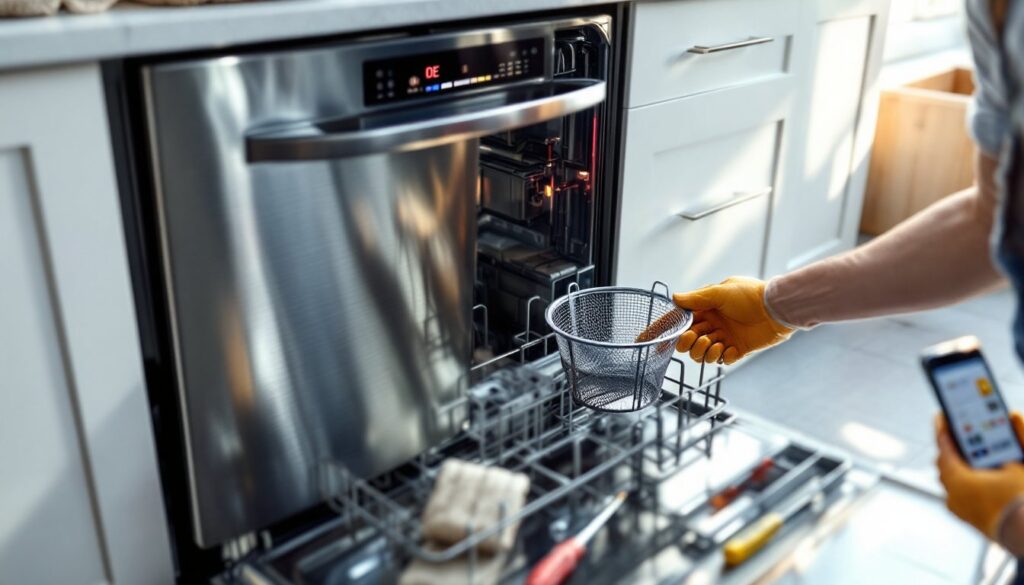
The OE (drain error) code means water isn’t leaving the tub within the allotted drain cycle time, usually 90 seconds. You’ll often find standing water in the bottom of the dishwasher after the cycle stops.
Common causes:
• Clogged filter assembly or sump area.
• Kinked or blocked drain hose.
• Obstructed air gap or garbage disposal connection.
• Failed drain pump.
Step-by-step fix:
- Disconnect power at the breaker or unplug the unit.
- Remove the lower dish rack and unscrew the cylindrical mesh filter and flat fine filter from the tub floor. Rinse under hot water to clear grease and debris.
- Check the sump area beneath the filter for bones, toothpicks, or broken glass.
- Inspect the drain hose (usually accessible by removing the lower kickplate). Look for kinks, loops that sag below the connection point, or clogs. Detach and flush with a garden hose if needed.
- Test the air gap (if installed): remove the chrome cap on the countertop and clear any buildup inside.
- Run a drain cycle manually by reinstalling filters, restoring power, and starting a rinse cycle.
If the error persists after clearing obstructions, the drain pump may have failed. Replacement pumps cost $60–$120 and require removing the dishwasher from the cabinet for access. Homeowners comfortable with hand tools and basic wiring can swap a pump in about an hour: otherwise, call an appliance repair tech.
LE Error Code: Motor and Circulation Problems
The LE (locked motor) code signals that the circulation motor isn’t spinning freely or drawing excessive current. This usually points to a mechanical jam or motor bearing failure.
Common causes:
• Foreign object lodged in the wash pump impeller.
• Worn motor bearings or seized rotor.
• Faulty motor wiring or control board issue (less common).
Step-by-step fix:
- Turn off power and remove the lower dish rack and filter assembly.
- Inspect the spray arm base and pump housing for obstructions. Shine a flashlight into the sump, look for small items like twist ties, fruit stickers, or plastic shards.
- Manually rotate the motor (if accessible) by reaching into the sump cavity and turning the impeller with a gloved hand. It should spin freely: grinding or resistance indicates a jam or bearing wear.
- Clear any debris, reassemble, and run a test cycle.
If the motor spins freely but the LE code returns, the motor itself may be failing. Motor replacement is a moderate-to-advanced repair involving disassembly of the lower cabinet, disconnecting wire harnesses, and possibly cutting old sealant. This repair typically runs $150–$250 in parts and labor and is best left to pros unless you have appliance repair experience.
IE Error Code: Water Inlet Failures
The IE (inlet error) code appears when the dishwasher doesn’t fill with water within four minutes of starting a cycle. The issue is almost always on the supply side, not the machine itself.
Common causes:
• Closed or partially closed water supply valve.
• Clogged inlet screen filter.
• Kinked supply line.
• Failed water inlet valve solenoid.
Step-by-step fix:
- Check the shutoff valve under the sink, twist it fully counterclockwise. Valves can drift closed from vibration over time.
- Disconnect the water supply line from the inlet valve (located at the front left or right corner of the dishwasher base). You’ll need a bucket and towel, some water will spill.
- Inspect the inlet screen filter inside the valve port. It’s a small mesh cylinder that catches sediment. Pry it out gently with needle-nose pliers and rinse under running water. Hard water deposits are the most common culprit: soak in white vinegar if heavily scaled.
- Check supply line condition: replace if kinked or older than 10 years. Braided stainless steel lines are more durable than rubber.
- Test the inlet valve: with the line reconnected, run a cycle and listen for the valve to click open. No click or hum means the solenoid is dead.
Inlet valves cost $25–$50 and are straightforward to replace: disconnect the supply line, remove two mounting screws, swap the wire harness, and install the new valve. Always turn off the water supply before disconnecting the line. Most homeowners can handle this repair in 20 minutes with basic hand tools.
Many appliance diagnostics follow similar troubleshooting principles, focusing on supply, drainage, and motor function. Cross-referencing symptoms across brands can reveal universal fixes, though always consult the manufacturer’s service manual for model-specific details.
How to Reset Your LG Dishwasher After Fixing an Error
Once you’ve cleared the mechanical issue, the error code may stay on the display until the control board is reset. LG dishwashers don’t have a dedicated reset button, but two methods work reliably.
Power cycle method:
- Turn off the circuit breaker feeding the dishwasher or unplug the unit (plug is usually accessible by removing the lower kickplate).
- Wait 5 minutes to allow capacitors in the control board to fully discharge.
- Restore power and close the door. The display should clear.
Button combination method:
For models with touch controls, press and hold the Start/Reset button for 3 seconds until the display goes blank. Open and close the door, then start a new cycle. If the underlying fault is fixed, the cycle will complete normally.
After a reset, run a rinse cycle with the dishwasher empty to verify all systems are functioning. If the same error code returns immediately or mid-cycle, the repair was incomplete or a second issue exists.
Persistent error codes after multiple resets may indicate:
• Control board failure: requires professional diagnosis with a multimeter and replacement parts ($150–$300).
• Wiring harness damage: rodent chewing or water intrusion can short sensors.
• Multiple component failures: on units older than 10 years, repair costs may exceed replacement value.
When to call a pro: If you’ve ruled out clogs, checked supply lines, and the error persists after reset, the issue likely involves the control board or internal wiring. Appliance techs have diagnostic software and factory service manuals that pinpoint faults faster than trial-and-error part swaps. Also, if your dishwasher is still under manufacturer warranty, self-repair may void coverage, check your documentation before disassembling anything beyond user-serviceable filters and racks.
For homeowners upgrading older kitchens, consulting resources like kitchen design experts can help match new appliances to cabinetry and plumbing constraints, avoiding installation errors that trigger error codes down the road.
Conclusion
Most LG dishwasher error codes point to fixable issues, clogs, kinked hoses, or worn filters, that homeowners can tackle with basic tools and an hour of time. Start with the simplest explanations (filters, supply valves, drain hoses) before moving to component replacement. Document your steps, take photos of wire connections, and don’t force parts that resist. When in doubt, call a licensed appliance tech: the cost of a diagnostic visit is cheaper than replacing a control board damaged by guesswork.