Tiling a fireplace surround is one of the highest-impact upgrades a homeowner can tackle. It’s visible, it’s permanent, and it sets the tone for the entire room. Whether refreshing a dated brick surround or building out a new gas insert, the tile choice shapes everything from maintenance to resale value. This guide walks through six design directions, from subway classics to geometric statements, and wraps with material selection essentials. Expect real dimensions, heat-rated products, and honest takes on what works for DIY installation versus what calls for a pro.
Table of Contents
ToggleKey Takeaways
- Fireplace tile ideas range from timeless 3×6-inch subway tiles to modern geometric and 3D options, with each design direction offering distinct visual appeal and installation complexity.
- Porcelain is the most versatile fireplace tile material, offering heat and stain resistance for any fireplace type without requiring sealing, while ceramic works best for gas and electric surrounds.
- Heat exposure is critical—verify tiles are ASTM C648 rated and check clearance requirements, as wood-burning fireplaces generate the highest radiant heat and often require materials to be 6–12 inches away from the firebox opening.
- Marble tile signals luxury but demands sealing every 6–12 months, while porcelain marble-look alternatives provide convincing aesthetics at lower maintenance costs and price points.
- Bold patterned encaustic or glazed tiles create a statement fireplace when confined to the firebox surround and framed with neutral field tile, preventing an overwhelming all-over pattern in open-plan spaces.
- Proper substrate preparation—including cement backerboard for heavy installations—and professional grout selection (polymer-modified for soot resistance) are essential for a fireplace tile surround that lasts decades.
Classic Subway Tile Designs for Timeless Appeal
3×6-inch subway tile remains the workhorse of fireplace surrounds for good reason: predictable cost, straightforward installation, and universal resale appeal. Standard white ceramic subway in a running bond (brick pattern) suits transitional and traditional homes, while a vertical stack bond lends a cleaner, more contemporary edge.
Material options include glazed ceramic, porcelain, and glass subway formats. For fireplace applications, verify the tile is ASTM C648 rated and suitable for high-heat zones, most glazed ceramics handle heat well, but check manufacturer specs if the surround sits within 6 inches of a firebox opening.
Grout width matters. A 1/16-inch joint reads sleek and modern: a 1/8-inch joint is easier to install for first-time tilers and hides minor lippage. Use unsanded grout for joints under 1/8 inch, sanded for anything wider. For a fireplace that sees real use, a polymer-modified or epoxy grout resists soot staining better than standard cement grout.
Color and finish variations keep subway from feeling stale. Beveled edges add subtle shadow lines: matte or crackle glazes soften the look in farmhouse or Scandinavian interiors. Herringbone or chevron layouts in subway tile deliver pattern interest without abandoning the classic form factor.
Modern Marble Tile Fireplace Styles
Marble tile signals luxury and pairs naturally with gas fireplaces, where heat output is controlled. Real marble, Carrara, Calacatta, or Thassos, requires sealing every 6 to 12 months and will etch if exposed to acidic cleaners. For a fireplace surround, budget $15–$35 per square foot for material, depending on grade and vein intensity.
Porcelain marble-look tile offers a lower-maintenance alternative at $8–$18 per square foot. Modern inkjet printing replicates book-matched slabs convincingly, and porcelain’s density makes it inherently heat-resistant and stain-proof. Large-format tiles, 12×24 inches or 24×48 inches, minimize grout lines and emphasize the slab aesthetic, but they demand a perfectly flat substrate and a large-notch trowel (1/2 × 1/2 inch) for proper coverage.
Installation considerations: Marble and large porcelain are heavy. A typical 24×48-inch porcelain plank weighs 18–22 pounds. Ensure the wall framing and any existing drywall or cement board can support the load. If tiling over painted drywall, at minimum scuff-sand and prime with a bonding primer: better yet, install 1/2-inch cement backerboard first.
Design directions include floor-to-ceiling marble surrounds that extend past the mantel, wraparound corner installations, and accent strips in contrasting marble, such as a narrow marble mosaic border framing a solid field.
Bold Patterned Tile Ideas for Statement Fireplaces
Encaustic cement tile and glazed patterned porcelain turn a fireplace into a focal point. Encaustic patterns, Moroccan stars, Spanish geometrics, Cuban florals, are pigmented through the tile body, not printed on the surface. They require sealing and can be pricey ($12–$25 per square foot), but the depth of color and handmade variation justify the cost for a high-visibility install.
Glazed patterned porcelain delivers similar visual punch at a lower price and without the maintenance burden. Many manufacturers now offer 8×8-inch or 9×9-inch tiles with bold graphics that mimic encaustic cement.
Layout strategy: Confine bold pattern to the firebox surround, the vertical face directly around the opening, and frame it with solid field tile or wood trim. An all-over pattern can overwhelm a room, especially in open-plan spaces. A centered medallion layout or a single column of pattern flanked by neutral tile keeps the look intentional.
Heat exposure: Cement tile should not be installed within 3–6 inches of a working firebox opening unless the manufacturer confirms heat tolerance. Porcelain handles heat better. Always check if the fireplace is wood-burning, gas, or electric: wood-burning units generate the highest radiant heat and require the most clearance.
Grout color can either highlight or soften the pattern. For high-contrast encaustic, a charcoal or black grout frames each tile: for a softer blend, choose a grout shade pulled from the tile’s mid-tones.
Rustic Stone and Slate Tile Options
Natural stone tile, slate, travertine, limestone, and ledger stone, fits craftsman, mountain, and farmhouse aesthetics. These materials bring texture and variation that man-made tile can’t replicate, but they demand more upfront prep and ongoing care.
Slate tile (typically 12×12 inches or 6×6 inches) is dense, heat-resistant, and available in charcoal, green, rust, and purple tones. It often arrives with a cleft (rough) surface that sheds soot and ash well. Seal slate with a penetrating sealer before grouting to prevent grout haze, and reseal annually if the fireplace sees regular use.
Travertine and limestone are softer and more porous. They’re beautiful in honed or tumbled finishes but will stain if not sealed properly. These stones work best for surrounds on gas or electric fireplaces with lower heat output. Avoid them on working wood-burning fireplaces unless the surround sits well back from the firebox.
Ledger stone panels (thin-cut natural stone in stacked, interlocking strips) became ubiquitous in the 2010s and remain popular for rustic builds. They install faster than individual tiles, most panels are 6×24 inches, but the look can read dated if overused. Balance ledger stone with clean trim and modern mantel design to keep it fresh.
Installation notes: Natural stone requires a medium-bed mortar or large-and-heavy-tile mortar due to thickness variation (often 3/8 to 1/2 inch). A wet saw with a diamond blade is non-negotiable for clean cuts. Stone dust is silica-based, so wear a respirator rated for dust (N95 minimum, ideally P100).
Contemporary Geometric and 3D Tile Trends
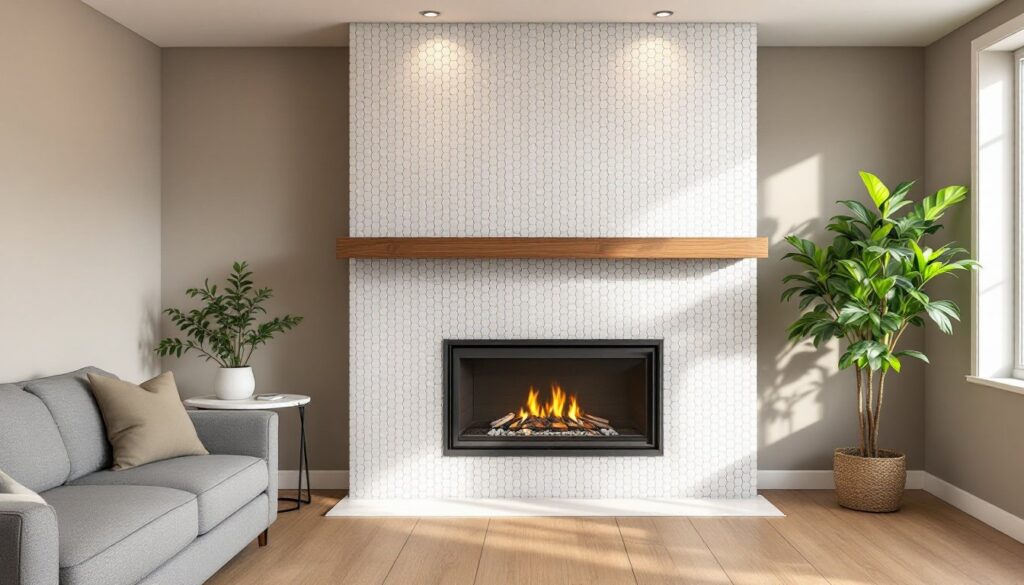
Geometric tile, hexagons, diamonds, elongated pickets, and arabesque shapes, breaks the grid and injects personality. 2-inch hexagon mosaics in matte black or white work in modern, minimalist spaces: elongated hexagons (sometimes called pickets) in stacked vertical runs create height and movement.
Three-dimensional relief tile adds literal depth. Wavy porcelain planks, faceted triangles, and embossed linear patterns catch and reflect firelight. These tiles typically come in 12×24-inch or 8×16-inch formats and install like standard field tile, but the shadow lines require careful lighting, a recessed downlight above the mantel or flanking sconces will accentuate the relief.
Color blocking with geometric shapes is trending in contemporary interiors: a column of charcoal hexagons down one side of the surround, balanced by a solid white field. This approach works best in modern or eclectic homes where asymmetry is intentional.
Installation complexity rises with geometry. Hexagons and arabesques often come on mesh-backed sheets, which simplifies layout but requires careful grout joint alignment, sheet edges must line up or the pattern skews. A laser level and dry layout are essential. If cutting individual geometric tiles, a wet saw and patience are your friends: many shapes don’t lend themselves to score-and-snap methods.
Heat considerations: Porcelain and ceramic geometrics handle fireplace heat without issue. Some resin-based or composite 3D tiles are rated only for walls away from high-heat sources, always verify before installing near a firebox.
Choosing the Right Tile Material and Finish
Material selection hinges on three factors: heat exposure, maintenance tolerance, and aesthetic.
Porcelain is the most versatile. It’s denser and less porous than ceramic, making it stain- and heat-resistant. Look for through-body porcelain if you plan to cut tiles heavily, the color runs through the entire thickness, so chips are less visible. Porcelain works for any fireplace type and requires no sealing.
Ceramic is lighter and less expensive than porcelain, suitable for gas and electric surrounds. Glazed ceramic handles moderate heat but can crack under sustained high temperatures from wood-burning fireplaces. It’s a solid DIY choice for cosmetic upgrades.
Natural stone (marble, slate, travertine) demands sealing and periodic maintenance but delivers unmatched texture and variation. Stone is heavy, factor in substrate reinforcement for large installations.
Glass tile offers luminous color and reflects firelight beautifully, but it telegraphs every imperfection in the substrate. Prep work and white thin-set mortar (to avoid dark shadows behind translucent glass) are critical. Glass is heat-resistant but brittle, protect it during install and avoid heavy impacts.
Finish types:
- Glossy: Easy to clean, reflects light, shows water spots and soot. Best for gas fireplaces in contemporary settings.
- Matte: Hides smudges and soot, adds warmth. Popular in farmhouse and Scandinavian styles.
- Honed: Low sheen, common in natural stone. Requires sealing.
- Textured or cleft: Adds grip and visual interest, harder to clean. Works well in rustic designs inspired by architectural stone features.
Thermal ratings: If the surround sits within 12 inches of a firebox opening, verify the tile is rated for direct heat exposure. Most manufacturers list maximum operating temperatures. For wood-burning fireplaces, non-combustible materials are required by code within 6–12 inches of the opening, depending on jurisdiction, check your local IRC amendments.
Conclusion
Tiling a fireplace surround blends design ambition with practical constraints, heat, weight, and substrate all push back. The smartest approach is to choose a material and pattern that aligns with fireplace type and maintenance willingness, then invest time in substrate prep and layout. A well-tiled surround lasts decades and anchors a room’s design, making it one of the most satisfying DIY projects for homeowners ready to handle mortar and a wet saw.