Shopping for a new dishwasher usually means choosing between wallet-friendly basics and feature-loaded machines that cost as much as a decent circular saw collection. The Bosch 100 Series splits that difference, offering the German engineering Bosch is known for without the premium price tag. If you’re upgrading from a builder-grade unit or replacing an aging appliance, this model deserves a closer look. It’s not fancy, no Wi-Fi, no third rack, no touch screens, but it handles the fundamentals well. Here’s what homeowners need to know before installing one in their kitchen.
Table of Contents
ToggleKey Takeaways
- The Bosch 100 Series dishwasher combines German engineering with an entry-level price, featuring a stainless steel tub and quiet 51 dBA operation that outperforms comparably priced competitors.
- This model excels at cleaning with three cycles (Heavy, Auto, Quick) and sensor-based water temperature adjustment, though it lacks specialty options like sanitize or half-load settings.
- At 2.9 gallons per cycle, the Bosch 100 Series is ENERGY STAR certified and uses less water than handwashing, making it an efficient choice for households seeking lower utility costs.
- Installation requires basic plumbing and electrical work with a level floor and dedicated 15-amp circuit; monthly filter cleaning is the most important maintenance task for long-term performance.
- Priced between $550–$700, the Bosch 100 Series dishwasher justifies its cost through durability, quietness, and energy savings over a 10-year lifespan compared to budget alternatives.
What Makes the Bosch 100 Series Stand Out?
The Bosch 100 Series occupies the entry-level slot in Bosch’s dishwasher lineup, but “entry-level” here doesn’t mean flimsy construction or poor performance. The brand’s reputation for durability carries through even at this price point, and that matters when you’re looking at a 10+ year service life.
What sets it apart from comparably priced competitors is the stainless steel tub. Most budget dishwashers use plastic tubs that stain, hold odors, and don’t dry as efficiently. Stainless steel resists both problems and improves drying performance by retaining heat better during the final cycle. You’ll also find a German-engineered wash system that uses precision spray arms instead of relying solely on water pressure to blast food off plates.
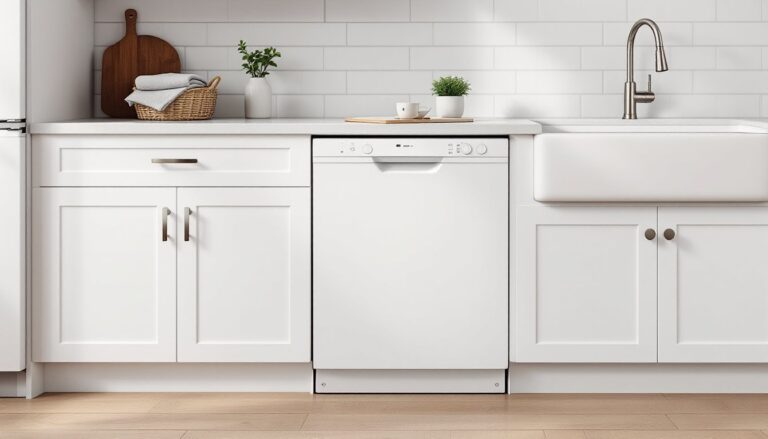
The design is straightforward: front controls, standard 24-inch width (the industry default for built-in units), and a dual-rack system with a silverware basket. It’s not trying to reinvent the dishwasher, it’s just executing the basics with better materials and tighter tolerances than you’d expect at this price. For DIYers planning a kitchen remodel or replacing a failing unit, that’s often exactly what’s needed.
Key Features and Specifications
Here’s what you’re working with in the Bosch dishwasher 100 series:
Capacity and Configuration:
- Standard 24-inch width (requires a 24″ x 34.5″ x 23.5″ rough opening)
- Two full-size racks with height-adjustable top rack
- Holds 12 place settings (about right for a family of four or regular entertaining)
- Traditional silverware basket (no separate cutlery tray like pricier models)
Wash System:
- Three wash cycles: Heavy, Auto, and Quick
- Two spray arms (upper and lower)
- Self-cleaning filtration system with a manual-clean fine filter
- Operates at 51 dBA (more on noise below)
Materials and Construction:
- Stainless steel tub (not polymer)
- Stainless steel door panel (visible when open)
- Standard toe-kick height: 4 inches (some models allow adjustment)
Energy and Water Use:
- ENERGY STAR certified
- Uses approximately 2.9 gallons per cycle (compare that to handwashing, which can use 20+ gallons)
- Annual energy cost around $30-$35 based on national averages
Drying Method:
- Condensation drying (no heated element, it uses residual heat from rinse water and the stainless tub)
The control panel is basic but functional: a rotary dial for cycle selection and a few buttons for options. No digital display, no Wi-Fi module, no app connectivity. If that sounds like a limitation, remember it also means fewer electronics to fail down the line. Appliance testing organizations consistently note that simpler controls tend to last longer in humid environments like dishwasher interiors.
Performance: How Well Does It Clean?
The cleaning performance is where the Bosch 100 Series dishwasher justifies its price. The three-cycle setup covers most situations: Heavy for stuck-on casserole dishes, Auto for everyday mixed loads, and Quick for lightly soiled items or a fast turnaround before guests arrive.
The Auto cycle is the workhorse. It uses sensors to adjust water temperature and cycle length based on soil level, which means you don’t need to pre-rinse dishes obsessively. (You should still scrape off large food debris, no dishwasher handles chicken bones gracefully.) Expect Auto cycles to run 90-120 minutes, which is typical for modern, water-efficient models.
The Heavy cycle adds heat and time for baked-on messes. It’s thorough but runs close to two hours. If you’re cooking a big meal and loading pots and pans, it’s worth the wait. The Quick cycle clocks in around 30 minutes and works well for items that just need a rinse and sanitize, think water glasses or plates used for dry snacks.
One limitation: the lack of a half-load or zone wash option. If you’re running small loads frequently, you’ll use the same amount of water and energy as a full load. For best efficiency, wait until the dishwasher is full before running it.
The adjustable top rack helps with flexibility. You can raise it to fit taller items like travel mugs on the bottom or lower it to accommodate serving platters on top. The tines fold down on both racks, which helps with odd-shaped items like mixing bowls or cutting boards. It’s not as customizable as higher-end Bosch racks, but it’s better than fixed tines found on cheaper models.
Noise Level and Energy Efficiency
At 51 dBA, the Bosch 100 Series is noticeably quieter than most budget dishwashers, which tend to hover around 55-60 dBA. For context, 51 dBA is about the noise level of a quiet library or light rainfall. You’ll hear it if you’re standing next to the unit, but it won’t drown out conversation in an open-plan kitchen or wake anyone in adjacent rooms.
Bosch achieves this through sound insulation in the door and tub, plus a brushless motor design that runs smoother than older-style motors with more moving parts. If ultra-quiet is your priority, Bosch’s 300 and 500 series drop into the 40s, but those cost significantly more. For most homeowners, 51 dBA is a sweet spot, quiet enough for comfort without paying a premium.
Energy efficiency is solid. The ENERGY STAR rating means it meets EPA guidelines for water and electricity use, which translates to lower utility bills over the dishwasher’s lifespan. At roughly 2.9 gallons per cycle, it uses less water than even a careful handwasher. Kitchen design experts often recommend efficient dishwashers as one of the simplest ways to reduce household water consumption, especially in regions facing drought conditions.
The condensation drying system is the trade-off here. It doesn’t use a heating element (which saves energy), but it also means plastic items may come out with water droplets. Stainless steel and ceramic dry completely, but Tupperware and plastic cutting boards often need towel-drying. It’s not a dealbreaker, but it’s worth knowing upfront if you run a lot of plastic through your dishwasher.
Installation and Maintenance Tips
Installing a Bosch 100 Series dishwasher is a straightforward DIY task if you’re comfortable working with plumbing and electrical connections. But, if you’ve never installed an appliance before, this isn’t the project to learn on, water leaks and electrical faults can cause serious damage.
Installation Basics:
- Confirm your rough opening: 24″ wide x 34.5″ tall x 23.5″ deep (standard for most built-in dishwashers)
- You’ll need a dedicated 15-amp circuit (NEC requirement for fixed appliances)
- Supply line: 3/8″ compression fitting with a shutoff valve (should already be present if replacing an existing unit)
- Drain connection: typically via an air gap or high loop to prevent backflow (check local plumbing codes)
- Mounting brackets: secure the unit to underside of countertop and side cabinets using provided hardware
Bosch includes an installation template and instructions, which are clearer than most manufacturers’. If you’re replacing an old dishwasher, the hardest part is often removing the old unit, especially if the previous installer used too much caulk or overtightened mounting screws.
Tool List:
- Adjustable wrench and channel locks (for supply line and drain connections)
- Screwdriver set (Phillips and flat-head)
- Level (critical, an unlevel dishwasher won’t drain properly and can cause door seal issues)
- Teflon tape (for threaded fittings)
- Bucket and towels (for water in the supply line)
Before sliding the unit in, check that the floor is level. Most dishwashers have adjustable front leveling legs, but if your floor slopes more than 1/4″ over 24″, you may need shims. An unlevel dishwasher can leak or fail to drain completely, leading to odor and mold issues.
Maintenance:
- Clean the filter monthly. It’s at the bottom of the tub and twists out. Rinse it under hot water and use a soft brush for stuck debris.
- Run a cleaning cycle every 3-6 months using dishwasher cleaner or white vinegar (one cup in the bottom of an empty tub, run on Heavy).
- Check spray arms periodically. Small food particles or mineral deposits can clog the spray holes. Remove them (they usually twist or pull off) and rinse thoroughly.
- Inspect door seals annually. Cracks or gaps let water escape. Replace gaskets if you see damage, they’re inexpensive and easy to swap.
Home maintenance guides emphasize that regular filter cleaning is the single most important task for dishwasher longevity. A clogged filter forces the pump to work harder and reduces cleaning performance.
Pros and Cons: Is It Worth the Investment?
Pros:
- Stainless steel tub at an entry-level price (most competitors use plastic)
- Quiet operation (51 dBA) won’t disrupt open-concept living spaces
- Reliable German engineering with a solid track record for longevity
- Energy and water efficient (ENERGY STAR certified, 2.9 gallons per cycle)
- Straightforward controls mean fewer electronic failures over time
- Adjustable top rack adds flexibility for taller items
Cons:
- No third rack for cutlery or small items (available on pricier Bosch models)
- Limited cycle options (only three, no sanitize, rinse-only, or half-load settings)
- Condensation drying leaves plastic items damp
- No delayed start feature (can’t schedule runs for off-peak electricity hours)
- Basic rack design with fewer adjustment points than mid-range models
For homeowners prioritizing durability and quiet operation on a budget, the Bosch 100 Series delivers. It’s a smart choice if you’re renovating and want appliances that’ll outlast builder-grade options without jumping into premium pricing. But, if you need specialty cycles (like sanitize for baby bottles), a third rack for small items, or prefer heat-dry for plastics, you’ll want to look at Bosch’s 300 Series or competitors’ mid-range offerings.
In 2026, typical pricing for the Bosch 100 Series ranges from $550-$700 depending on finish options and retailer promotions. That’s roughly $100-$200 more than basic models from brands like Frigidaire or GE, but the stainless tub and quieter operation justify the difference for most buyers. Over a 10-year lifespan, the energy savings and lower repair likelihood also tilt the cost-benefit analysis in Bosch’s favor.
Conclusion
The Bosch 100 Series dishwasher isn’t flashy, and that’s part of its appeal. It focuses on the fundamentals, cleaning thoroughly, running quietly, and lasting a decade or more, without the upcharge for features most homeowners rarely use. If your kitchen needs a reliable workhorse that handles daily loads without drama, this model fits the bill. Just be realistic about what you’re not getting: it’s basic, but it’s basic done right.