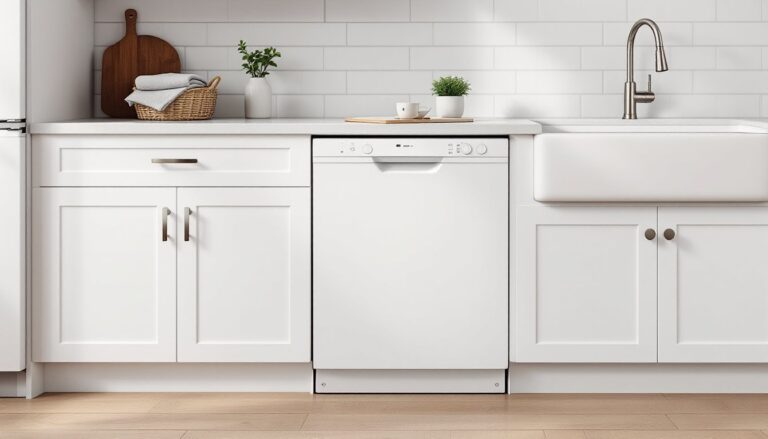
If you’re working with a tight kitchen layout or outfitting an apartment, a 24 inch dishwasher might be the perfect appliance upgrade. These compact workhorses fit standard cabinetry openings without sacrificing cleaning performance, offering a practical solution for small homes, galley kitchens, and even outdoor kitchenettes. Unlike 18-inch models that hold only a handful of place settings, a 24 dishwasher delivers nearly the same capacity as full-size units, making it ideal for households that can’t spare counter space but still need efficient dish cleaning. In this guide, we’ll walk through what defines a 24 inch built in dishwasher, the features worth prioritizing, installation steps, and how to choose the right model for your space.
Table of Contents
ToggleKey Takeaways
- A 24 inch dishwasher is the industry standard for built-in models, holding 12 to 16 place settings and fitting typical base cabinet openings across North America.
- Modern 24 dishwashers use only 3 to 4 gallons per cycle compared to 20+ gallons for hand-washing, delivering significant water savings without compromising cleaning performance.
- Essential features to prioritize include adjustable racks, third racks for flatware, Energy Star certification, stainless steel tubs, and whisper-quiet operation (44 dB or lower) for open-concept kitchens.
- A 24 inch built in dishwasher requires proper measuring, dedicated electrical circuits, hot water supply, and drainage plumbing—read the installation manual before purchasing to ensure compatibility with your cabinet layout.
- Budget $400 to $1,500+ depending on features and quality, and expect entry-level models at $400–$600, mid-range units at $600–$900, and premium options with advanced wash zones at $900–$1,500+.
- Installing a 24 inch dishwasher boosts home resale value, saves 30 to 40 minutes daily versus hand-washing, and provides superior sanitation through high-temperature cycles that kill foodborne pathogens.
What Is a 24 Inch Dishwasher and Who Needs One?
A 24 inch dishwasher refers to the appliance’s width, the standard dimension for built-in dishwashers across North America. When you hear someone mention a dishwasher without specifying size, they’re almost always talking about a 24-inch model. This width matches typical base cabinet openings (nominal 24 inches, though actual cutout dimensions vary slightly by manufacturer).
Even though being labeled “compact” in some marketing materials, a 24 dishwasher is actually the industry norm. It typically holds 12 to 16 place settings, depending on rack configuration and manufacturer. For context, an 18-inch dishwasher holds 8 to 10 place settings, enough for a couple but tight for families.
Who benefits from a 24 inch built in dishwasher? Almost anyone with a standard kitchen footprint. These units work in:
- Urban apartments and condos where kitchen space is at a premium but cabinets follow standard dimensions
- Galley kitchens in older homes, where every inch counts but you still have a 24-inch base cabinet slot
- Accessory dwelling units (ADUs) and in-law suites built to code with standard cabinet sizes
- Outdoor kitchens (if the model is rated for outdoor or covered use)
- Boat galleys and RVs that use residential-style cabinetry
If you’re retrofitting a vintage kitchen with narrow cabinets (21 inches or less), you’ll need an 18-inch model or portable unit instead. Always measure your actual cabinet opening before ordering, nominal dimensions don’t account for trim, filler strips, or non-standard builds.
Key Features to Look for in a 24 Inch Dishwasher
Not all 24 inch dishwashers are created equal. Here’s what separates a workhorse from a headache:
Adjustable upper racks let you accommodate taller pots and stemware. Look for models with at least two height positions: some premium units offer continuous adjustment.
Third racks (or cutlery trays) sit above the upper rack and hold flatware, small utensils, and even espresso cups. This frees up space in the lower rack and improves wash coverage.
Decibel rating matters more than you’d think. A dishwasher rated at 44 dB or lower is considered whisper-quiet, you can run it during dinner without raising your voice. Models above 50 dB are noticeably louder, which may be fine if your kitchen is isolated from living areas.
Cycle options and wash zones add flexibility. Half-load or zone wash settings let you run just the lower rack if you’re short on dishes, saving water and energy. Sanitize cycles (which reach at least 150°F per NSF/ANSI Standard 184) kill 99.9% of bacteria, useful for baby bottles or cutting boards.
Energy Star certification indicates the unit meets EPA efficiency standards. As of 2026, qualifying dishwashers use no more than 3.5 gallons of water per cycle and 270 kWh per year. That’s a meaningful savings over older models, which could use 6+ gallons per load.
Stainless steel tubs resist stains and odors better than plastic interiors, and they dry dishes more effectively because the material retains heat.
Hard water handling is crucial if you’re in regions with high mineral content. Built-in water softeners or rinse-aid dispensers prevent cloudy glassware and scale buildup on heating elements.
Finally, check the warranty. Most manufacturers offer one year on parts and labor: premium models extend coverage to five years on the tub and door liner. If you’re installing this yourself, confirm whether DIY installation voids the warranty, some brands require licensed plumbers for coverage.
Top Benefits of Installing a 24 Inch Dishwasher
Beyond clean dishes, a 24 inch dishwasher delivers practical advantages that ripple through your daily routine and home value.
Time savings are the most obvious benefit. Hand-washing a full day’s dishes for a family of four takes 30 to 40 minutes: a dishwasher does the same job in under two hours of passive runtime. That’s time you can spend on other projects, or just off your feet.
Water efficiency is often overlooked. Modern 24 dishwashers use 3 to 4 gallons per cycle, while hand-washing the same load can consume 20+ gallons if you leave the tap running. Even with mindful hand-washing, you’ll rarely beat a dishwasher’s water efficiency when cleaning a full load.
Better sanitation comes from high-temperature wash and rinse cycles that your hands can’t tolerate. The final rinse in most dishwashers reaches 130°F to 160°F, hot enough to kill common foodborne pathogens. That’s a real benefit if you’re washing items that contacted raw meat or dairy.
Resale value gets a bump. Buyers expect a built-in dishwasher in homes with full kitchens: lacking one can be a red flag during showings. A 24 inch built in dishwasher is a relatively low-cost upgrade (compared to countertops or cabinets) that signals a maintained, functional kitchen.
Counter space preservation is critical in small kitchens. By handling dishes mechanically, you avoid the drying rack sprawl that claims half your prep area. Some homeowners also appreciate the noise masking, running a quiet dishwasher during a dinner party covers up kitchen cleanup sounds better than clanking pots in the sink.
Finally, dishwashers reduce the need for harsh scrubbing, which extends the life of nonstick coatings, delicate glassware, and wooden utensil handles (though you should still hand-wash wood and cast iron).
Installation Considerations for Your 24 Inch Dishwasher
Installing a 24 inch dishwasher is a straightforward job if you’re replacing an existing unit and your rough-in is code-compliant. If you’re cutting into cabinetry for a first-time install, budget extra time for plumbing and electrical runs.
Measuring Your Space
Start by measuring the cabinet opening width, height, and depth. Standard rough-in dimensions for a 24-inch dishwasher are:
- Width: 24 inches (some models require 24.5 inches to allow for side brackets)
- Height: 34 to 35 inches from floor to countertop underside (adjustable legs let you fine-tune fit)
- Depth: 24 inches from cabinet face to back wall (not counting door protrusion)
Measure at multiple points, old houses settle, and you might find the opening tapers. If your space is narrower than 24 inches, you’ll need filler strips or a smaller unit. If it’s wider, add filler panels to close gaps (exposed sides look unfinished and let debris fall behind the unit).
Check the countertop underside clearance. Some stone counters have a 1-inch lip or support structure that reduces usable height. Most dishwashers adjust from 33.5 to 34.5 inches tall via threaded leveling legs, but verify before ordering.
Measure the door swing clearance. The dishwasher door needs at least 24 inches of unobstructed floor space in front to open fully. Kitchen islands closer than 36 inches can create tight spots, workable but awkward when loading the bottom rack.
Plumbing and Electrical Requirements
Electrical: Dishwashers require a dedicated 15-amp or 20-amp circuit (per NEC Article 422.10). Most units draw 10 to 15 amps during the heating cycle. The circuit should terminate in a junction box under the sink or in the adjacent cabinet, not behind the dishwasher itself, you need service access without pulling the unit out.
If you’re adding a dishwasher to a kitchen that never had one, you’ll need to run new wiring from the panel. That’s a job for a licensed electrician unless you’re comfortable with residential electrical work and local codes allow homeowner-performed wiring. Pull a permit, inspectors will verify proper grounding and GFCI protection if required in your jurisdiction.
Plumbing: You’ll need three connections:
- Hot water supply line (typically 3/8-inch compression fitting tapped off the sink shutoff or a dedicated stub-out)
- Drain line (5/8-inch dishwasher discharge hose connecting to the sink tailpiece or garbage disposal)
- Air gap or high loop (to prevent backflow: codes vary, some jurisdictions mandate an air gap mounted on the sink or countertop, others allow a high loop secured under the counter)
Use braided stainless steel supply lines instead of plastic or rubber, they’re more durable and less prone to burst. Secure the drain hose with hose clamps at both ends: a loose connection will flood your cabinet.
If you’re connecting to a garbage disposal, knock out the disposal’s dishwasher inlet plug with a screwdriver and hammer before attaching the hose, forgetting this step is a common rookie mistake that causes standing water in the dishwasher.
Leveling and securing: Once plumbing and power are connected, adjust the leveling legs so the unit sits plumb front-to-back and side-to-side (use a torpedo level on the door). An unlevel dishwasher won’t drain completely and may develop door-seal leaks. Secure the unit to the underside of the countertop with the included mounting brackets, this prevents tip-over when the door is open and loaded.
Run a test cycle and check all connections for leaks before pushing the unit fully into place. It’s far easier to tighten a fitting now than after you’ve reinstalled the kick plate and toe guard.
How to Choose the Right 24 Inch Dishwasher for Your Home
Selecting the best 24 inch dishwasher comes down to matching features to your household’s needs and your kitchen’s infrastructure.
Capacity vs. efficiency trade-offs: If you run the dishwasher daily, prioritize a model with a third rack and flexible tines, it’ll maximize every load. If you run it twice a week, look for half-load or delay-start features to avoid running a half-empty machine.
Noise tolerance: Open-concept kitchens benefit from ultra-quiet models (42 to 44 dB). If your dishwasher is behind a closed door or in a basement kitchenette, a 48 to 50 dB model costs less and performs just as well. For reference, 40 dB is roughly the sound of a library: 50 dB is a quiet conversation.
Smart features and connectivity: Many 2026 models offer Wi-Fi connectivity for cycle monitoring, maintenance alerts, and remote start. These are genuinely useful if you’re on time-of-use electricity rates and want to schedule runs during off-peak hours. If your utility charges a flat rate, the feature is more novelty than necessity. Smart kitchen upgrades can be appealing, but prioritize core wash performance first.
Panel-ready vs. finished front: Panel-ready (or custom panel) dishwashers accept a cabinet door panel that matches your existing cabinetry, creating a seamless look. They cost $100 to $300 more than stainless or black stainless models and require precise panel cutting, usually a job for a cabinet shop. Finished-front models are faster to install and easier to replace down the line.
Reliability and serviceability: Check recent reliability surveys (Consumer Reports, J.D. Power) and note which brands have local service networks. A dishwasher that requires a three-week wait for a technician is a three-week pile of dirty dishes. Bosch, Miele, and KitchenAid consistently rank well for longevity: budget brands often trade durability for upfront savings.
Budget guidelines: As of early 2026, expect to pay:
- $400 to $600 for entry-level models with basic cycles and plastic tubs
- $600 to $900 for mid-range units with stainless tubs, adjustable racks, and quieter operation
- $900 to $1,500+ for premium models with third racks, advanced wash zones, and ultra-quiet performance
Prices fluctuate with supply chain conditions and seasonal sales (Memorial Day, Black Friday, and January are historically good times to buy). Don’t forget to factor in delivery, haul-away of the old unit, and installation if you’re not doing it yourself, that can add $150 to $300 to the total.
Finally, read the installation manual before you buy. Some models have unusual rough-in requirements (rear-entry plumbing, for example) that may not fit your cabinet layout. Manufacturers post PDFs online: a ten-minute review can save you a return trip and restocking fee.
Whether you’re renovating a cramped galley or just replacing a worn-out unit, a 24 inch built in dishwasher is a practical investment that pays dividends in time, water savings, and kitchen functionality. Measure carefully, prioritize the features that match your routine, and don’t skip the leveling step during install, your dishes (and your floors) will thank you.