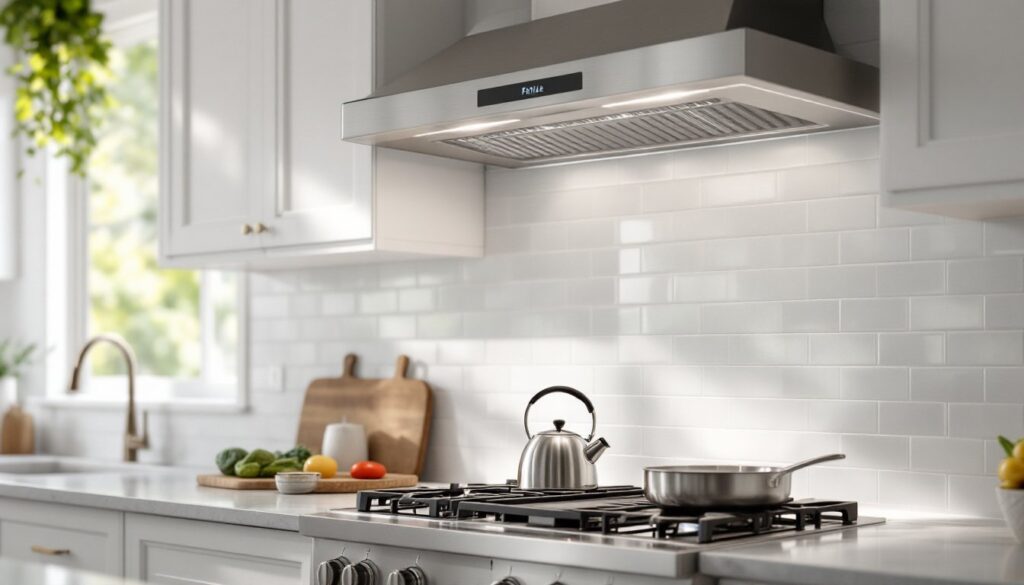
Fotile range hoods have carved out a reputation for blending performance with design, particularly in kitchens where space is tight and aesthetics matter. Unlike traditional hoods that simply vent out cooking fumes, Fotile’s approach focuses on efficiency and quiet operation, two priorities that matter when you’re cooking daily. Whether you’re replacing an aging hood or upgrading during a kitchen remodel, understanding what sets Fotile apart and which model fits your layout can save time, money, and frustration. This guide breaks down the key considerations, from mounting types to maintenance, so you can make an informed choice without sifting through marketing fluff.
Table of Contents
ToggleKey Takeaways
- Fotile range hoods stand out with dual-motor systems that operate at 50–60 decibels, making them significantly quieter than conventional hoods while improving capture efficiency.
- Modular stainless steel baffle filters are dishwasher-safe and easier to maintain than mesh filters, requiring cleaning every 4–6 weeks for daily cooks.
- Choose mounting type based on kitchen layout: wall-mount offers strongest ventilation for gas ranges, under-cabinet suits compact kitchens, and island models require more complex ceiling installation.
- Calculate required CFM by multiplying 100 CFM for every 10,000 BTUs of burner output; a standard 40,000 BTU gas range needs at least 400 CFM.
- Fotile range hoods cost 30–50% more than mid-range brands but justify the investment for high-heat cooking, open-plan kitchens, and premium remodels seeking design cohesion.
- Installation requires 3–5 hours, proper duct sizing (6 or 8-inch), and correct mounting height (18–24 inches above gas cooktops), with availability limited to specialty dealers and 4–6 week lead times.
What Makes Fotile Range Hoods Stand Out?
Fotile, a Chinese manufacturer that entered the North American market in the early 2010s, built its name on dual-motor systems and lower noise output compared to many domestic brands. Most Fotile hoods run at 50–60 decibels at top speed, roughly equivalent to normal conversation, while conventional hoods can hit 70+ decibels.
The brand’s signature feature is the dual centrifugal blower design, which pulls air from both sides of the hood rather than relying on a single central fan. This improves capture efficiency for multi-burner stovetops and reduces the need to run the fan at maximum speed, which extends motor life and keeps sound levels down.
Another differentiator is the modular baffle filter system. Instead of mesh or perforated aluminum filters that trap grease but clog quickly, Fotile uses stainless steel baffles that channel grease into a collection tray. They’re dishwasher-safe and easier to clean than traditional filters, which matters if you cook with high heat or stir-fry regularly.
Fotile hoods are also built with tempered glass canopies and stainless steel housings, giving them a clean, contemporary look that works in modern kitchens. That said, they tend to sit at a higher price point, typically $600 to $1,800 depending on the model and CFM rating, so they’re not budget picks.
Top Fotile Range Hood Models to Consider
Fotile’s lineup includes wall-mount, under-cabinet, and island models. Each suits different kitchen layouts and ventilation needs.
Wall-mount hoods like the Fotile JQG7505 offer 600 CFM and work well over ranges against an exterior wall. They require ducted ventilation, meaning you’ll need a 6-inch or 8-inch duct run to the outside. These are best for kitchens with gas ranges or high-BTU cooktops where strong ventilation is non-negotiable.
Under-cabinet hoods, such as the Fotile JQG3601, fit beneath upper cabinets and are ideal for galley kitchens or smaller spaces. They typically offer 300–400 CFM, which is sufficient for electric or induction cooktops but may struggle with heavy stovetop use. Installation is simpler since they mount to the cabinet bottom and require less ductwork planning.
Island hoods like the Fotile JQG9001 are ceiling-mounted and designed for cooktops in kitchen islands. They require ducting routed through the ceiling or attic, which adds complexity and cost. Most island models start at 500 CFM and include downdraft-style options that pull air horizontally before venting up, reducing the visual bulk of a traditional overhead canopy.
Wall-Mount vs. Under-Cabinet vs. Island Range Hoods
Choosing the right mount type depends on your kitchen layout and whether your range sits against a wall or on an island.
Wall-mount hoods provide the strongest ventilation and are the easiest to duct if you have an exterior wall nearby. They’re also the most visible, so aesthetics matter. Fotile’s wall-mount models include touch controls and LED task lighting, which many kitchen appliance reviews highlight as practical upgrades over older halogen bulbs.
Under-cabinet hoods save space and cost less, but they sacrifice some CFM capacity. If you’re working with a standard 30-inch range and rarely cook at high heat, this trade-off is reasonable. Just confirm your upper cabinets can support the weight, most Fotile under-cabinet models weigh 35–50 pounds installed.
Island hoods are the most expensive and labor-intensive to install. You’ll need access to ceiling joists, and ductwork often has to run horizontally before turning vertical. If your island sits more than 10 feet from an exterior wall, expect longer duct runs and potential CFM loss due to static pressure. Some jurisdictions require a licensed HVAC contractor for island hood installations, so check local codes before ordering.
Key Features to Look for in a Fotile Range Hood
When comparing Fotile models, focus on CFM rating, noise level, ducting requirements, and control type.
CFM (cubic feet per minute) measures how much air the hood moves. As a rule of thumb, you need 100 CFM for every 10,000 BTUs of burner output on a gas range. A standard four-burner gas range with 40,000 BTU total output requires at least 400 CFM. If you cook with woks or high-heat searing, bump that to 500–600 CFM.
Noise level is measured in sones or decibels. Fotile hoods typically range from 3–6 sones at max speed, which is quieter than many competitors. For reference, 1 sone equals about 40 decibels, the sound of a refrigerator hum.
Ducting can be vertical (straight up through the roof or wall) or horizontal (out through an exterior wall). Vertical ducting is more efficient and loses less CFM to friction. If you’re retrofitting a hood into an existing kitchen, confirm the duct size matches, Fotile hoods use 6-inch or 8-inch round ducts, and reducers can choke airflow.
Control type varies by model. Touch controls are easier to clean than mechanical buttons, but they can be finicky if your fingers are wet or greasy. Some Fotile hoods include delay-off timers that run the fan for 5–10 minutes after cooking stops, clearing residual smoke and odors. This feature is worth having if you cook indoors frequently.
LED lighting is standard on most Fotile hoods and provides better task lighting than older incandescent bulbs. Look for models with adjustable brightness, some kitchens benefit from dimmable lights during meal prep.
Finally, check for auto-clean or self-cleaning modes. A few Fotile models include a steam-clean cycle that loosens grease buildup inside the blower housing, though you’ll still need to manually wipe down surfaces.
Installation Tips and Requirements
Installing a Fotile range hood is a two-person job and typically takes 3–5 hours depending on the mount type and whether ducting is already in place. You’ll need a drill, level, stud finder, duct tape, metal shears, and a hole saw for cutting duct openings.
Start by locating wall studs or ceiling joists. Wall-mount hoods require at least two studs for secure anchoring, and island hoods need joist support for the ceiling bracket. If your existing ducting doesn’t align with the new hood, you may need to cut a new duct path, this often means cutting into drywall or going through the roof.
Duct runs should be as short and straight as possible. Each 90-degree elbow reduces CFM by roughly 10%, so avoid unnecessary turns. Use rigid metal ducting instead of flexible aluminum duct, which crimps and restricts airflow. Secure all duct joints with metal foil tape, not cloth duct tape, which degrades over time.
Electrical connection is usually hardwired, requiring a dedicated 120V circuit. If you’re not comfortable working with electrical boxes and wire nuts, hire a licensed electrician. Some jurisdictions require permits for range hood installations, especially if you’re adding new ductwork or running new electrical.
Mount the hood 18 to 24 inches above the cooktop surface for gas ranges, or 18 to 20 inches for electric. Too low, and you risk heat damage to the hood: too high, and ventilation efficiency drops. Use a level during installation, crooked hoods not only look bad but can cause grease to pool unevenly in the baffle filters.
Test the hood before finishing the installation. Run it at all speeds and check for vibration, unusual noise, or air leaks around the duct connection. Many kitchen remodeling guides recommend running the hood for 10 minutes to ensure the motor doesn’t overheat.
Maintenance and Cleaning Best Practices
Fotile hoods require less frequent filter cleaning than traditional mesh-filter models, but they still need regular attention.
Baffle filters should be cleaned every 4–6 weeks if you cook daily, or monthly for lighter use. Pull the filters out by lifting the front edge, then run them through the dishwasher or hand-wash with hot, soapy water and a degreaser. Avoid abrasive scrubbers on stainless steel, they’ll scratch the surface. Let filters dry completely before reinstalling.
Grease collection trays sit beneath the baffles and catch drippings. Empty and wipe these every 2–3 weeks to prevent overflow. Buildup can ignite if exposed to open flame, so don’t skip this step.
Exterior surfaces can be wiped down with a microfiber cloth and stainless steel cleaner. Spray cleaner onto the cloth, not directly onto the hood, to avoid streaks. For tempered glass canopies, use a non-ammonia glass cleaner.
Blower housing should be inspected annually. Some Fotile models allow access to the blower by removing a service panel. Wipe down the interior with a damp cloth to remove grease buildup that can affect motor efficiency. If you smell burning or notice reduced suction, grease accumulation in the blower is a likely cause.
LED bulbs typically last 20,000+ hours but can be replaced if they fail. Most Fotile hoods use low-voltage LED modules that snap out with a quarter-turn. Check the user manual for the correct replacement part number.
Avoid using harsh chemicals or oven cleaners on any part of the hood. They can damage the stainless steel finish and void the warranty. Fotile offers a standard 2-year parts and labor warranty, with some retailers extending coverage to 3 years.
Is a Fotile Range Hood Worth the Investment?
Fotile hoods cost 30–50% more than mid-range domestic brands, so the value proposition depends on how you cook and what you prioritize.
If you cook frequently with high heat, use gas burners, or stir-fry often, the dual-motor system and higher CFM ratings justify the cost. Quieter operation is a real benefit in open-plan kitchens where noise carries into living spaces, and the baffle filter design reduces long-term maintenance hassle.
For homeowners who cook occasionally or rely on electric cooktops, a less expensive under-cabinet hood from a brand like Broan or Zephyr may be sufficient. Fotile’s premium pricing makes most sense in remodels where appliance quality and design cohesion matter, or in homes where resale value is a consideration. High-end kitchens with professional-grade ranges benefit from well-designed ventilation systems, and Fotile’s fit and finish align with that tier.
Availability can be an issue. Fotile hoods are sold through specialty appliance dealers and online retailers, not big-box stores, so you won’t find them at Home Depot or Lowe’s. Delivery times can stretch to 4–6 weeks, which complicates project timelines.
Warranty and service are solid but not exceptional. Fotile’s North American customer support has improved, but replacement parts can take time to arrive. If you’re in a rural area, finding a local technician familiar with the brand may be difficult.
Bottom line: Fotile hoods are a strong choice for serious home cooks who value performance and aesthetics over budget. They’re not for everyone, but in the right kitchen, they deliver.